

Articles
Why Did Paul Confront Peter?
September 22, 2026
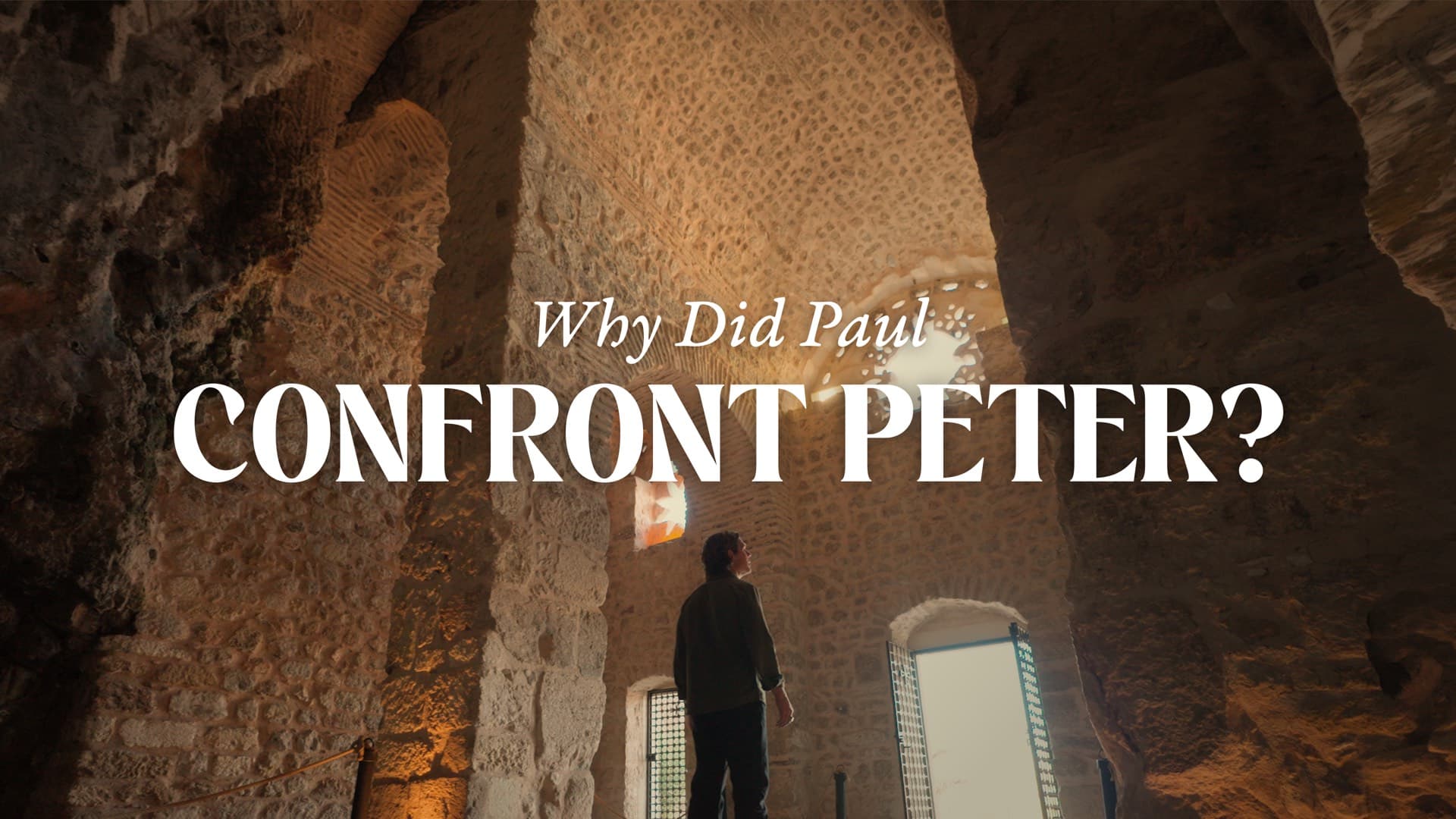
What if one of the most dangerous things you could do wasn’t something you said, but where you chose to sit?
When Peter came to Antioch, he did something that, at first glance, might not seem all that significant: he stopped eating with Gentile believers.
He didn’t deny Jesus or reject the gospel. In fact, Peter had been eating freely with Gentile Christians until a group of Jewish believers arrived from Jerusalem. Then, under pressure, he began to pull away.
Paul saw what was happening, and he confronted Peter publicly.
“When Cephas came to Antioch, I opposed him to his face, because he stood condemned” (Galatians 2:11).
It is one of the most uncomfortable scenes in the New Testament: three of the most influential leaders in the early church caught in a conflict over something as ordinary as a meal.
But as Paul understood, where Peter chose to sit said something about who he believed belonged.
The Question That Could Have Divided the Church
To understand Paul’s reaction, we have to understand what was happening in Antioch.
The church there was becoming something the Christian movement had never seen before. Gentiles (non-Jews) were coming to Jesus in significant numbers. These were people who had not grown up keeping the Mosaic law. They didn’t share Jewish dietary practices. The men were not circumcised. They had been formed by an entirely different religious and cultural world. Yet they were receiving the gospel. And suddenly one of the defining questions of Christianity had to be answered: Did Gentiles have to become Jewish in order to fully belong to Jesus?
Some believers from Judea thought they did. Acts records their position plainly:
“Unless you are circumcised, according to the custom taught by Moses, you cannot be saved” (Acts 15:1).
This wasn’t a debate about worship styles or church preferences. It was about salvation. If these believers were right, faith in Jesus wasn’t enough. Gentile converts would also need to take on the covenant markers and requirements of the Mosaic law.
Paul and Barnabas strongly opposed this teaching. Eventually the disagreement became significant enough that they traveled to Jerusalem to meet with the apostles and elders to discuss these theological matters.
The decision was historic.
Gentile believers did not need to come under the Mosaic law in order to belong to God’s people. They belonged because of Jesus.
Jerusalem, the mother church, recognized what God was doing among the Gentiles. The implications were enormous. Would Christianity remain primarily a Jewish movement centered in Jerusalem? Or would the gospel move across ethnic, cultural, and geographic boundaries into the nations?
Antioch was becoming the place where the answer could be seen. But theological conclusions are sometimes easier to affirm in a council than to live out around a table.
Then Peter Came to Antioch
Sometime later, Peter came to Antioch. At first, he freely ate with Gentile believers. That may sound insignificant to modern ears, but in the ancient world, sharing a table communicated fellowship, acceptance, and belonging. Every time Peter sat down with Gentile Christians, his actions declared, “You belong here.”
Then another group arrived. Paul describes them as certain people who “came from James.” Their presence created pressure, and Peter began to pull away from the Gentiles.
Paul tells us why:
“Because he was afraid of those who belonged to the circumcision group.” — Galatians 2:12
Fear changed where Peter sat. Peter didn’t stand up and announce a different gospel. He didn’t publicly deny that Gentiles could follow Jesus. He simply stopped eating with them. But imagine being one of those Gentile Christians. Yesterday Peter shared your table. Today he won’t. Yesterday his presence communicated that you were family. Today his absence communicated that something about you made you spiritually unacceptable.
For Paul, this wasn’t merely bad manners. It contradicted the gospel.
See the conflict between Peter and Paul unfold in Cities of the First Christians: Antioch with Dr. Matthew Larsen. Explore the series →
Even Barnabas
Other Jewish believers began following Peter’s example.
Paul writes: “The other Jews joined him in his hypocrisy, so that by their hypocrisy even Barnabas was led astray” (Galatians 2:13).
You can almost feel Paul’s disappointment in those words. “Even Barnabas.” Barnabas…the bridge builder. The man who had defended Paul when Jerusalem didn’t trust him. The leader who arrived in Antioch and saw the grace of God among Gentiles, and rejoiced. The one who had helped build this church. Even he was swept up in the pressure.
Paul was watching people he loved rebuild a wall the gospel had already torn down. So he confronted Peter. Paul says Peter and the others were “not acting in line with the truth of the gospel” (Galatians 2:14).
That is the heart of the Antioch Incident.
Peter’s theology and Peter’s behavior were telling two different stories. And that remains one of the great dangers of the Christian life. Our lives can deny truths our mouths affirm.
The gospel declared that Jew and Gentile were brought into God’s family through Jesus, not through ethnicity, cultural background, circumcision, or obedience to the Mosaic law. So if Jesus had welcomed the Gentiles, Peter could not treat them as second-class Christians.
Why the Table Mattered
That is why the table mattered. Who sat together revealed who truly belonged together. Antioch was becoming a living demonstration of what the gospel could do. Jew and Gentile. People with different cultures. Different histories. Different customs. Different tables. Now becoming one family around Jesus.
And the greatest threat to that unity wasn’t necessarily theological ignorance, but fear. Peter already knew that Gentiles belonged. He had watched God pour out the Holy Spirit upon Gentiles in the house of Cornelius. But knowing the truth and having the courage to live the truth are not always the same thing.
Peter feared what others would think. And fear made him behave inconsistently with what he knew God had done.
Go deeper into the Antioch Incident and what it meant for the early church in Cities of the First Christians: Antioch. Explore the series →
Where Are You Sitting?
This may be where the story of Antioch becomes uncomfortable for us. Because most of us will never publicly deny the gospel. But the way we live may not always line up with what we say we believe.
We can preach grace while making people prove themselves before they belong. We can believe reconciliation is central to Christianity while arranging our lives so we rarely have to cross cultural, social, generational, or economic lines. We can believe every person carries dignity before God and still change our posture when certain people enter the room.
Peter did. Barnabas did. Which means none of us should imagine ourselves beyond it.
The deeper question isn’t simply, “What do you believe?” It’s, “Does the way you live tell the truth about what you believe?”
Because Jesus welcomed us to His table when we had no claim to a seat. We were not brought near because of our background, morality, accomplishments, ethnicity, politics, or religious performance. We were brought near by grace. And people who have been welcomed by grace should become people who make room by grace.
That is what Paul was fighting for in Antioch. His concern wasn’t about winning an argument or proving his authority over Peter. He was fighting for a church whose tables told the truth about its gospel.
And maybe that is the invitation Antioch leaves with us: Look at your table.
Who do you move toward? Who do you move away from? Where has fear become stronger than conviction? And where might Jesus be asking you to pull out a chair?
Because sometimes the clearest evidence that we actually believe the gospel isn’t found only in what we preach.
Sometimes it’s found in where we choose to sit and who we are willing to sit beside.
There’s More to the Story of Antioch
The conflict between Peter and Paul was only one part of what unfolded in Antioch. In Cities of the First Christians: Antioch, Dr. Matthew Larsen traces the people, tensions, and defining moments that shaped the early church in this remarkable city.
Explore the five-part series alongside Scripture and reflection questions that help you dig deeper.
Articles & Devotionals



Ready to Go Deeper? Start Free.
$9.99/month
$119.88/year
- 7-day free trial
- 150+ hours of Bible studies, series, & documentaries
- New content added monthly
- Guided reflections & daily tools
- Ad-free platform
$89.99/year
Save 25% vs. monthly
- 7-day free trial
- 150+ hours of Bible studies, series, & documentaries
- New content added monthly
- Guided reflections & daily tools
- Ad-free platform
Try it free. Cancel anytime.