

Articles
What Happened in Antioch After the Apostles Left?
September 29, 2026
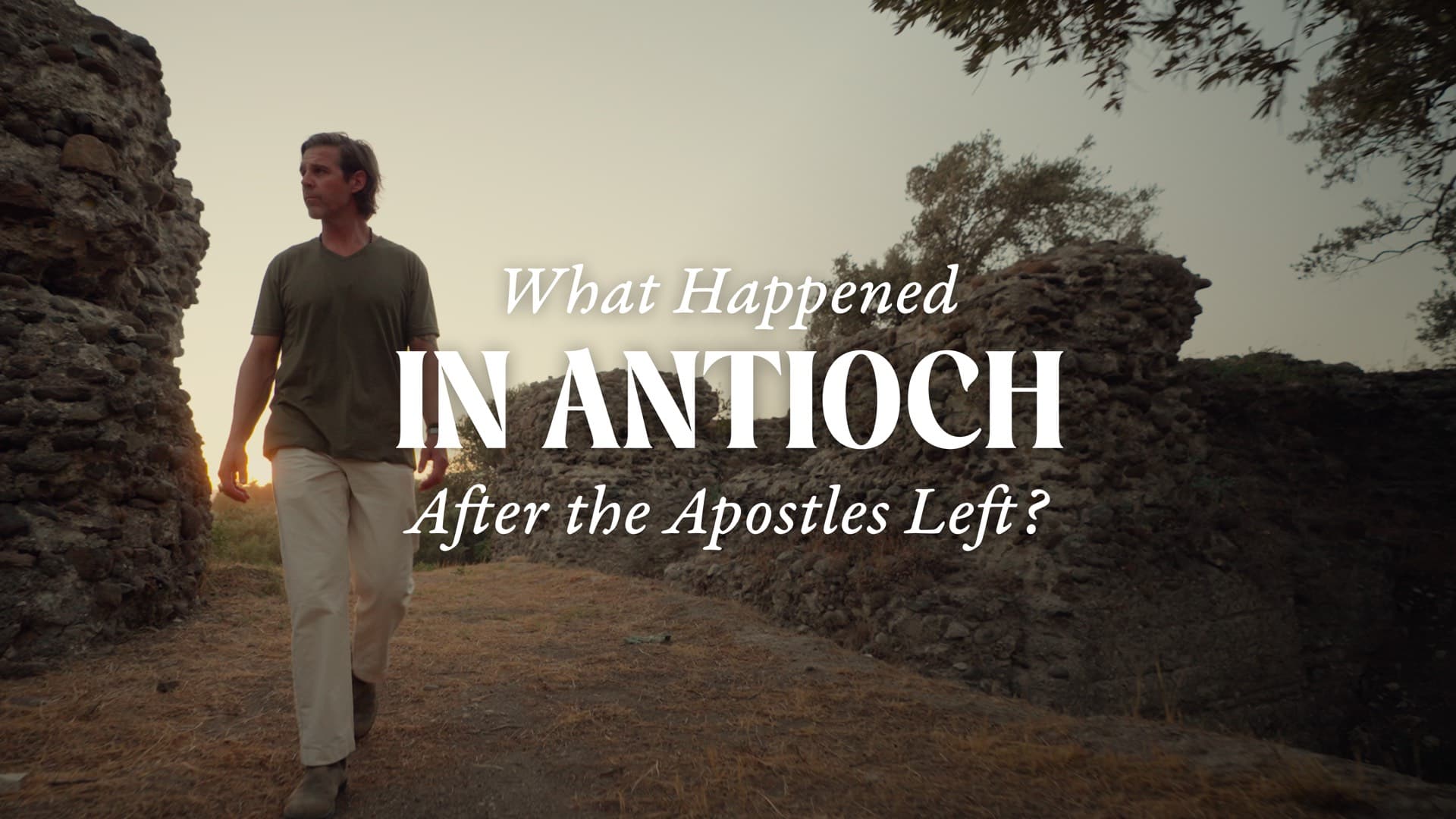
What happens to a movement when the people who started it are gone?
Eventually, the leaders who helped establish the church in Antioch were no longer there. Paul had moved on. Peter and Barnabas were gone. But the church they had helped build remained, and a new generation of Christians was now responsible for what came next.
It’s one of the most overlooked parts of the story of early Christianity. We rightly marvel at the courage of the apostles who carried the gospel into the Roman world. But what happened when the people who came after them had to decide whether the faith they inherited was worth carrying forward?
In Antioch, that question became intensely personal. The pagan world around them wasn’t disappearing, and the pressure on Christians wasn’t easing.
One of the leaders who emerged in that world was Ignatius of Antioch.
The Generation After the Apostles
Ignatius belonged to the generation standing remarkably close to the apostles. Early Christian tradition connects him with the apostle John, although the precise nature of that relationship cannot be established with certainty. What we do know is that by the early second century, Ignatius was serving as bishop of Antioch. The city around him was still thoroughly Roman and pagan and Christians were a strange minority. They didn’t participate in the religious life of the empire like everyone else. They wouldn’t worship the emperor. They gathered around Jesus, called Him Lord, cared for one another as family, and lived according to a kingdom Rome didn’t understand. To Roman eyes, Christianity could look less like a respectable religion and more like a dangerous superstition.
It was against this backdrop that eventually Ignatius was arrested. But rather than being executed quietly in Antioch, he was transported under armed guard toward Rome.
Along the 1,200-mile journey, Ignatius began writing. Seven letters associated with him survive from his journey toward Rome, written to encourage churches to remain united, resist false teaching, and remain faithful to Jesus. And throughout those letters, Ignatius spoke openly about what he believed awaited him in Rome: death.
Ignatius believed he would be killed in Rome, likely through the Roman spectacle of execution involving wild beasts. Yet instead of abandoning Jesus to preserve his life, he became increasingly determined to remain faithful. He wrote to the Christians in Rome asking them not to intervene to save him.
The conviction that anchored him was that death did not have the final word. Because Jesus had risen, Ignatius believed that even losing his life could not separate him from the life he had found in Christ.
Rome could take Ignatius’s life, but it could not take away the hope that made him willing to give it. His faith rested on the resurrection and the belief that death did not have the final word.
Then Came Babylas
More than a century later, Antioch was still producing leaders shaped by the same conviction.
One of them was Babylas, bishop of Antioch during the third century. An early Christian tradition tells of a remarkable confrontation involving Babylas and an emperor. The emperor arrived while the church was gathered and wanted to enter. Imagine the opportunity. The most powerful man in the Roman world standing outside your church. Most leaders would have been tempted to clear the room, prepare the best seat, and consider what political influence might come from having the emperor inside. Babylas did the opposite. According to the tradition, because of the emperor’s conduct and participation in pagan worship, Babylas refused to allow him to enter as though nothing separated his life from the holiness of Christian worship.
Think about the courage required for that moment. The emperor stood at the height of Roman power. Babylas led a religious minority that could easily be crushed. For Babylas, the authority of the emperor stopped at the doors of the church. Jesus was Lord, not Caesar.
Babylas was eventually arrested during the persecution of Christians, imprisoned, and died as a result of his suffering. Yet the church in Antioch continued.
What Was This Church Built On?
By the time of Ignatius and Babylas, the personalities who dominate the opening chapters of Antioch’s story were memories. Paul wasn’t there to preach. Barnabas wasn’t there to encourage. Peter wasn’t there to lead. Yet the faith continued.
The apostles had spent their lives pointing beyond themselves to Jesus. And the generations after them had taken notes. The church did not need Paul to remain alive because Jesus was alive. That conviction gave Christians an extraordinary resilience.
Their leaders could be arrested, their gatherings threatened, and even their lives taken without changing the truth at the center of their faith: Jesus was still Lord.
This is why the history of Christianity so often follows the shape of the cross: suffering and death followed, somehow, by life. The way of the cross became the way the church moved through history.
There’s more to the story of Antioch. Explore the people, places, and events that shaped the early church in Cities of the First Christians: Antioch with Dr. Matthew Larsen. Explore the series →
What Kind of Faith Are We Handing Forward?
Eventually, every generation of Christians faces the same question Antioch faced: What happens when the leaders who carried the faith to us are gone?
Leaders change. Mentors finish their race. One generation eventually has to entrust the church to another. What matters is that we form people who know how to follow Jesus when we are no longer there.
A faith that depends on the right leader, the right personality, or comfortable circumstances will struggle when those things are gone. But the faith handed forward in Antioch had already survived the loss of its founding leaders, cultural opposition, and persecution. Its strength wasn’t found in the people who first carried it there, but in the One they had taught the church to follow.
That kind of faith is still needed.
The goal of Christian leadership is not simply to gather people around ourselves. It is to form people who can remain faithful when we are no longer there. Whether we’re parents, pastors, mentors, or simply people following Jesus alongside someone else, eventually we have to entrust what we’ve received to another generation.
Paul carried it. Barnabas carried it. Ignatius carried it. Babylas carried it. And eventually, someone carried it to us.
Now the faith has been placed in our hands.
The question is not simply whether we will preserve what we inherited. The question is whether we will live it with enough courage, conviction, and faithfulness that someone after us will want to carry it too.
Explore the Story of Antioch
Step into the world of the early church in Cities of the First Christians: Antioch. Filmed on location, this five-part series with Dr. Matthew Larsen traces the people, tensions, and defining moments that shaped the church in Antioch and helped carry the gospel beyond it.
Explore the series alongside Scripture and reflection questions that help you dig deeper.
Articles & Devotionals




Ready to Go Deeper? Start Free.
$9.99/month
$119.88/year
- 7-day free trial
- 150+ hours of Bible studies, series, & documentaries
- New content added monthly
- Guided reflections & daily tools
- Ad-free platform
$89.99/year
Save 25% vs. monthly
- 7-day free trial
- 150+ hours of Bible studies, series, & documentaries
- New content added monthly
- Guided reflections & daily tools
- Ad-free platform
Try it free. Cancel anytime.