

Articles
Why Antioch Became Christianity’s Proving Ground
September 1, 2026
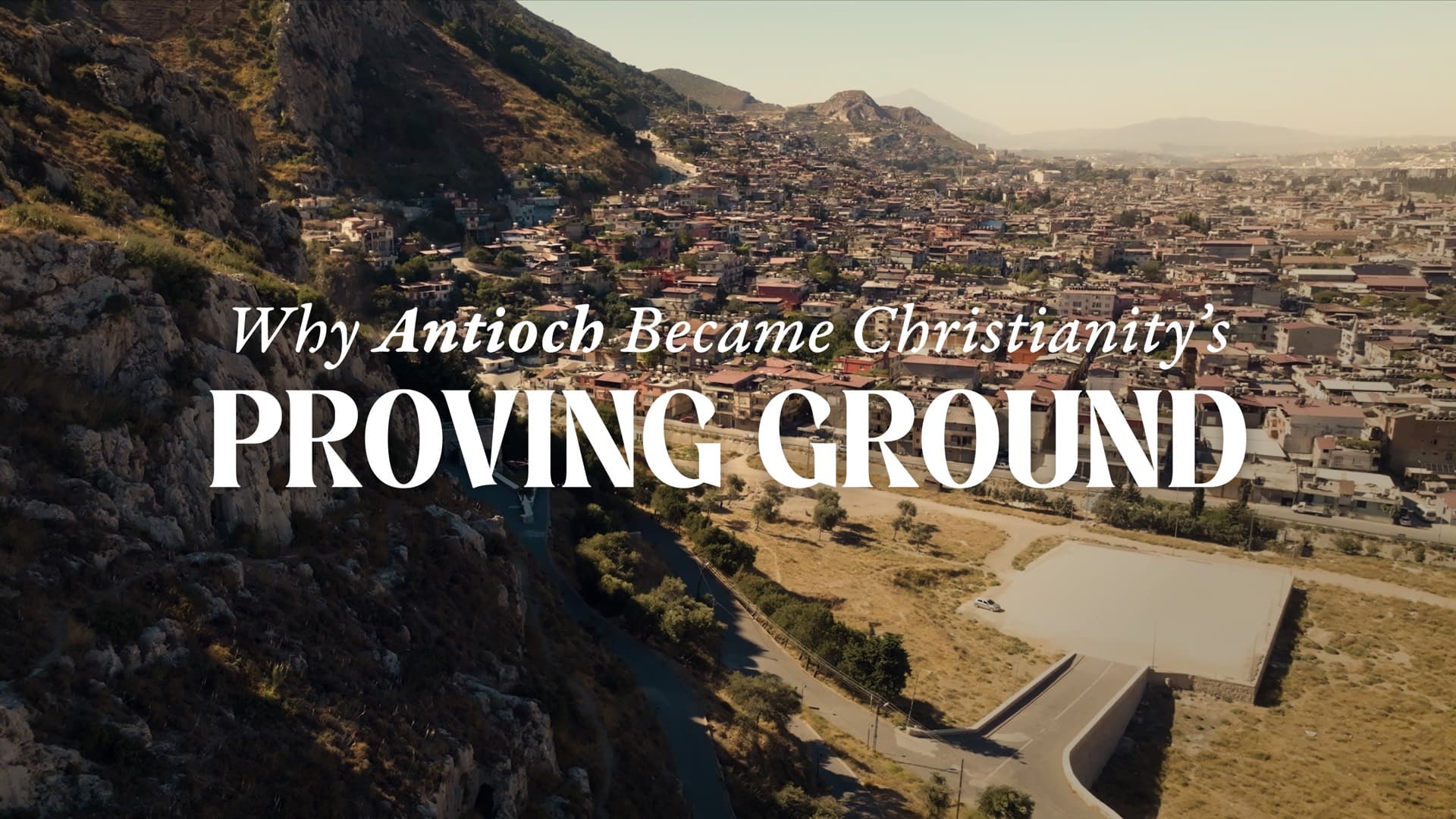
What if the moment you thought was setting everything back was actually the moment God was moving the story forward?
What if the disruption, disappointment, or loss that seemed to close one chapter was quietly opening another?
Nobody fleeing Jerusalem after the death of Stephen would have called what was happening to them a church-growth strategy. Stephen was dead. A wave of persecution had broken out. Homes were being entered. Believers were being dragged away. Families were being scattered. And one of the men helping drive the whole thing forward was a young Pharisee named Saul.
Acts records the moment with chilling simplicity:
“On that day a great persecution broke out against the church in Jerusalem, and all except the apostles were scattered throughout Judea and Samaria.” — Acts 8:1
The movement Jesus had begun seemed to be coming apart. But something strange happens in the story of Christianity:
What looks like the end keeps becoming a beginning.
The persecution intended to contain the gospel became one of the primary means by which the gospel spread beyond Jerusalem. And eventually, some of those scattered believers traveled roughly 460 miles north to one of the most important cities in the Roman world:
Antioch. And that very place became the epicenter of a movement of God.
Why Antioch Mattered to the Early Church
To understand the significance of Antioch, you have to feel the distance between it and Jerusalem. Christianity began as an unmistakably Jewish movement centered in Jerusalem. Jesus was a Jewish Messiah. His apostles were Jewish. The earliest believers were Jewish. The Scriptures they preached from were Jewish. But Antioch was different.
This was one of the great metropolitan centers of the Roman Empire. It was a sprawling, wealthy, strategically located city shaped by commerce, religion, politics, ethnicity, and empire. Trade routes converged there. Cultures collided there. Temples dotted its religious landscape. Greek and Roman influences mixed with significant Jewish communities and people arriving from across the ancient world. If Jerusalem was the birthplace of the church (Acts 2), Antioch would become its proving ground (Acts 11).
Could this message about a crucified and risen Jewish Messiah survive outside the cultural ecosystem in which it began? Could Jesus take root among people who did not share the same history, customs, or assumptions? Could the gospel cross borders? Could it survive the city?
See the story of Antioch unfold on location in Cities of the First Christians: Antioch, a new five-part series with Dr. Matthew Larsen. Explore the series →
How Persecution Brought the Gospel to Antioch
Those questions become even more remarkable when you consider how Christianity arrived there in the first place. It came through refugees.
Acts 11 reaches backward to the persecution surrounding Stephen:
“Now those who had been scattered by the persecution that broke out when Stephen was killed traveled as far as Phoenicia, Cyprus and Antioch…” — Acts 11:19
The people who carried the gospel to Antioch had been displaced. They were carrying grief. Some had left homes, possessions, relationships, and familiarity behind.
And yet they carried something else with them…the story of Jesus.
When What Looks Like an Ending Becomes a Beginning
There is an almost unbelievable irony buried inside this story. Saul of Tarsus helped create the conditions that led to the birth of the church in Antioch. Before Paul ever preached in Antioch, his persecution helped push Christians there. Acts says Saul began “destroying the church,” entering homes and dragging believers away to prison (Acts 8:3). He was trying to suffocate the Jesus movement before it spread. Instead, he helped scatter its missionaries.
The man who tried to stop Christianity from spreading became part of the reason it spread—and would eventually become one of its greatest missionaries.
The God we find in Scripture is one who demonstrates His ability to take what was intended for destruction and weave it into redemption. The central symbol of Christianity is not a throne. It is a cross. An instrument designed by Rome to humiliate and destroy became the place where Christians proclaim that God reconciled the world to Himself. The worst thing became the place where God accomplished the greatest thing. This does not mean Christians should romanticize suffering. It means Christians refuse to believe suffering gets the final word.
A century later, the early Christian writer Tertullian would capture something of this paradox:
“The blood of the martyrs is the seed of the church.”
Scatter the people of God, and they preach wherever they land. Apply pressure, and somehow the message spreads through the cracks. This is precisely what happened on the road from Jerusalem to Antioch.
What looked like Christians being driven from one city looked, from another perspective, like seeds being planted across the Roman world. And one of those seeds landed in Antioch.
Why Antioch Still Matters
Today, much of ancient Antioch lies beneath layers of history. Earthquakes devastated the city repeatedly. Empires came and went. Buildings collapsed. Cities were rebuilt upon cities. Some of the streets walked by the first Christians now lie roughly 35 feet beneath the modern landscape.
There is something strangely fitting about that. You can bury the streets. You can lose the buildings. You can watch civilizations disappear. But the movement that took root there is still alive. And perhaps that is why Antioch matters so much. Because Antioch forces us to confront a question Christians have wrestled with ever since the cross:
What if the thing we believe is destroying the story is actually becoming part of the way God moves the story forward?
The believers fleeing Jerusalem could not see Antioch yet. They could only see what they had lost. Stephen was still dead. Persecution was still real. Saul was still dangerous.
But somewhere along the road north, frightened believers carried the gospel into a city that would become one of the most important centers of Christianity in the ancient world.
Barnabas would arrive. Saul would return—not as persecutor, but preacher. And Antioch would eventually become the launching point for a missionary movement that would carry the gospel deeper into the Roman world.
Walk the streets where this story unfolded with Dr. Matthew Larsen in Cities of the First Christians: Antioch. Watch Antioch on QAVA →
What If You Haven’t Reached Your Antioch Yet?
This is where their story begins to become ours.
Most of us have moments in life when we are convinced we know what God should be doing. We have a picture of how the story is supposed to unfold. Then something breaks. A door closes. A relationship changes. A dream dies. A season ends. A plan falls apart. Something we prayed would never happen happens anyway.
And in those moments, we are tempted to assume that because we cannot see what God is doing, God must not be doing anything. But the road to Antioch tells another story.
Those believers did not leave Jerusalem knowing they were about to participate in one of the most significant expansions of Christianity in history. They simply took the next faithful step. And sometimes that is faith.
Faith is not always understanding what God is doing. Sometimes faith is carrying Jesus with you when you don’t understand where you are going. You may be standing in a chapter of your life that feels more like Jerusalem than Antioch right now—more scattering than gathering, more loss than purpose, more questions than answers.
Don’t rush to explain it. Don’t pretend it doesn’t hurt. But don’t assume the story is over.
The God of resurrection has an extraordinary ability to bring beginnings out of endings, mission out of disruption, and redemption out of places we would never have chosen.
The believers leaving Jerusalem could not see Antioch. And perhaps you can’t see your Antioch yet either.
So keep walking one step at a time. Keep trusting. Keep carrying Jesus into whatever place the road has taken you.
Because the gospel has always had a strange way of flourishing in places where everyone assumed it should have died. And sometimes the road you never would have chosen becomes the road God uses to take Jesus somewhere He was always intending to go.
Go Deeper Into the Story of Antioch
Continue exploring the people, places, and events that shaped the early church in Cities of the First Christians: Antioch, a five-part series with Dr. Matthew Larsen filmed on location in ancient Antioch. Explore the series alongside Scripture and reflection questions that help you dig deeper.
Articles & Devotionals




Ready to Go Deeper? Start Free.
$9.99/month
$119.88/year
- 7-day free trial
- 150+ hours of Bible studies, series, & documentaries
- New content added monthly
- Guided reflections & daily tools
- Ad-free platform
$89.99/year
Save 25% vs. monthly
- 7-day free trial
- 150+ hours of Bible studies, series, & documentaries
- New content added monthly
- Guided reflections & daily tools
- Ad-free platform
Try it free. Cancel anytime.